Jack Halberstam Anarchitecture After Everything: A Trans Manifesto
in conversation with Benoît Loiseau (The Death of the Clinic)
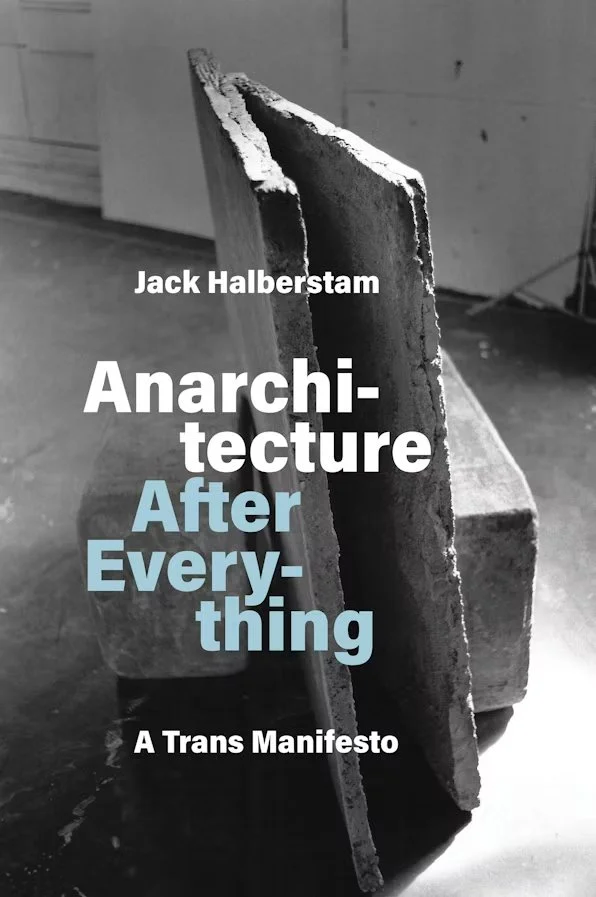
We are excited to celebrate the publication of Jack Halbertam’s new book Anarchitecture After Everything: A Trans Manifesto on Thursday September 24th. Even more so that Benoît Loiseau, author of the new The Death of the Clinic, will be joining the conversation.
“A must read. Understanding trans bodies as ‘unarchitectural’ projects and architecture as a task for building social and political norms, Halberstam has written a new theory of the body as much as a manifesto for unbuilding architecture.”
—Paul B. Preciado, author of Dysphoria Mundi: A Diary of Planetary Transition
Anarchitecture, a radical aesthetic practice of unmaking the built environment, staged a vigorous confrontation with urban renewal and gentrification projects in the 1970s. In Anarchitecture After Everything, Jack Halberstam identifies a powerful lexicon of transformation within anarchitecture, joining the movement’s practices of cutting and splitting with the destabilizing power of transness to detonate acts of formal violence in our time.
Anarchitecture describes the aesthetic practice of splitting and cutting, dismantling and undoing, unmaking, unbuilding, and ultimately unworlding. The trans body splits bodily coherence, dismantles the gender binary, and unbuilds bodily meaning. In these chapters, Gordon Matta-Clark’s cuts, along with Alvin Baltrop’s 1970s images of collapsing warehouses and Beverly Buchanan’s post-demolition fragmentary sculptures, return with a vengeance through the contemporary aesthetic gestures of Yve Laris Cohen, Jesse Darling, Nicole Eisenman, Kiyan Williams, Cassils, boychild, and Every Ocean Hughes. Anarchitecture unmakes space and offers a new rhetoric for emptiness. In its conclusion, the book explores this rhetoric through Renee Gladman’s anarchitectural experiments with language.
By reading anarchitecture through transness and transness through anarchitecture, Halberstam helps us see the trans body as a space of radical unmaking and as a portal to new lexicons for transformation.
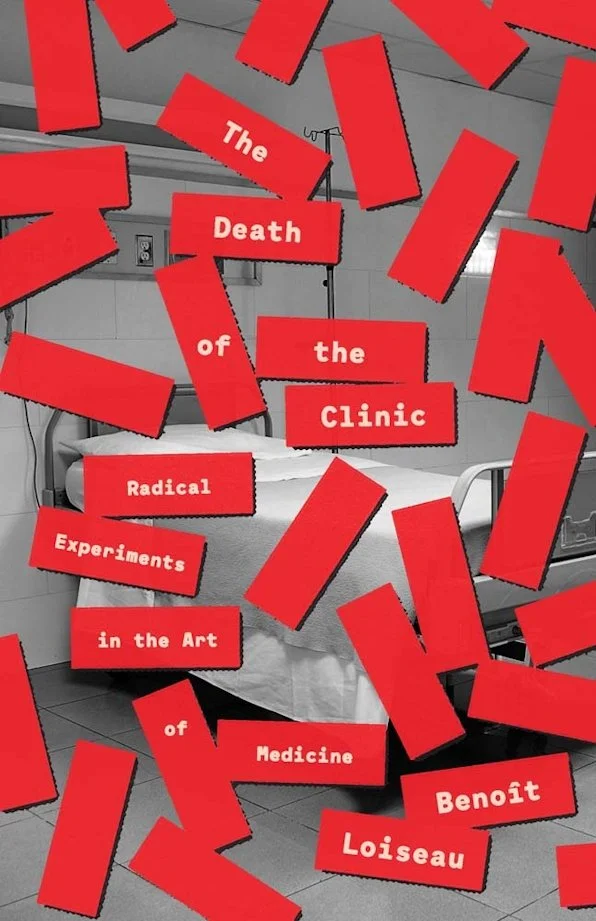
A vividly written and deeply researched history of radical experiments in modern health care and the politics of caring for one another
The Death of the Clinic: Radical Experiments in the Art of Medicine weaves together biography, history, and personal reflection in a groundbreaking exploration of five experimental clinics in recent Western history.
Each of these clinics emerged in response to seismic political shifts and era-defining global events, yet at their heart lie the stories of extraordinary individuals who dared to reimagine how we care for one another. At once deeply personal and sharply analytical, Benoît Loiseau’s investigation is anchored in his own encounters with medical care and in the quiet influence of one health worker who shaped his life: his mother. In moving and reflective interludes addressed to her, Loiseau illuminates the emotional and ethical stakes of medicine today. Reframing Michel Foucault’s seminal book, The Death of the Clinic is a radical invitation to reimagine the clinic—not as a fixed institution but as a living, evolving practice rooted in care, resistance, and collective imagination.
Jack Halberstam is David Feinson Professor of the Humanities at Columbia University and the author of seven books, including Trans*: A Quick and Quirky Account of Gender Variance, The Queer Art of Failure, and Female Masculinity. A 2024 Guggenheim fellow, he is the winner of the Arcus/Places Prize in 2018 for innovative public scholarship and was recently the subject of the film So We Moved by Adam Pendleton in 2022.
Benoît Loiseau is an award-winning writer, art critic, and academic. His writing has appeared in ArtReview, Frieze, The Guardian, the New York Times, and the White Review, and he is a founding editor of the BitterSweet Review. Loiseau is a postdoctoral fellow in New York University’s Department of French Literature, Thought, and Culture and at University Paris 8–Vincennes Saint-Denis. He lives in Brooklyn and Paris.